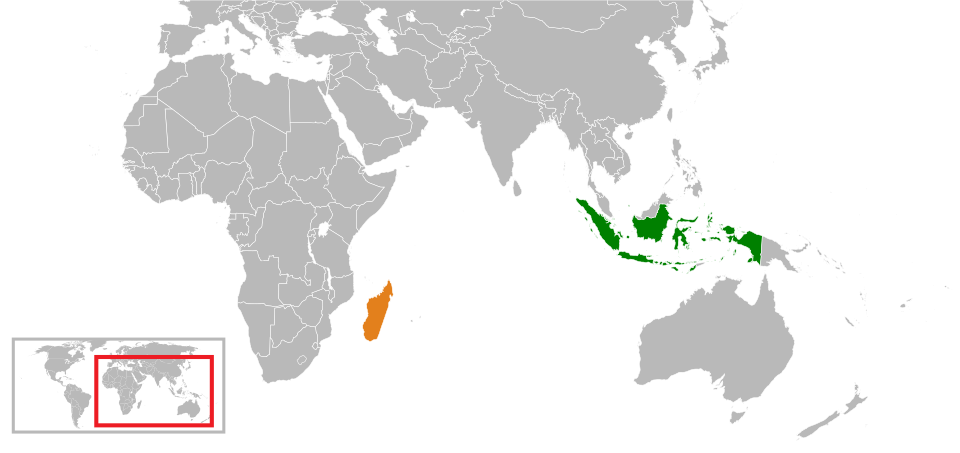
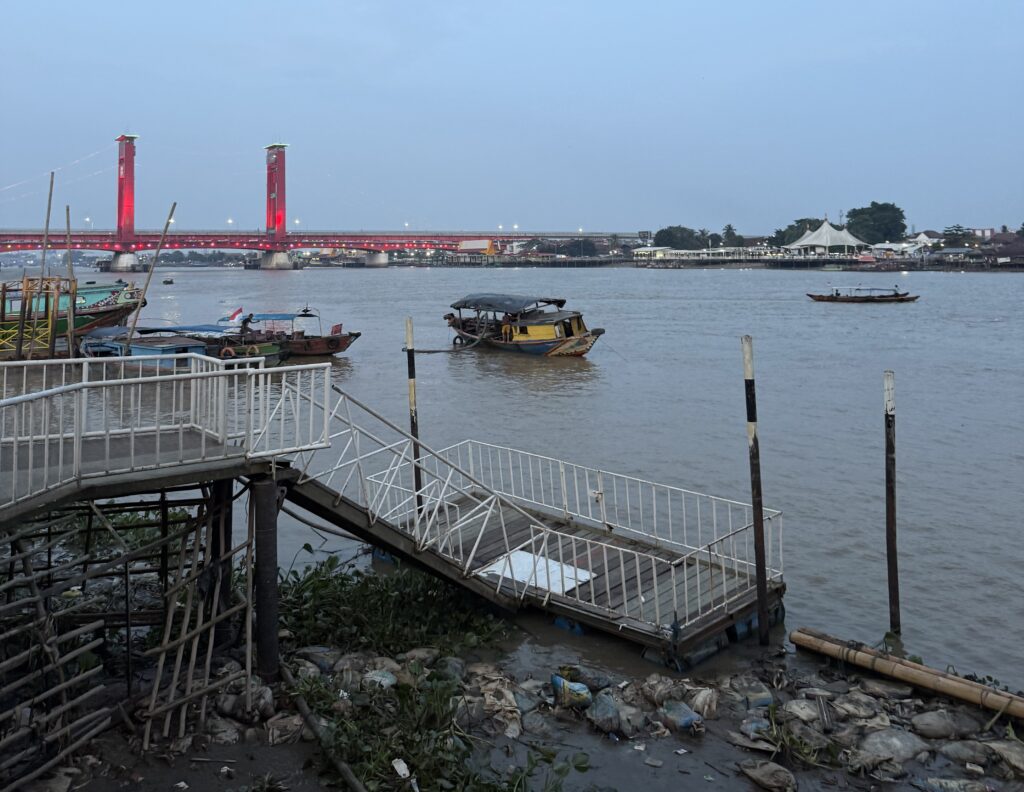
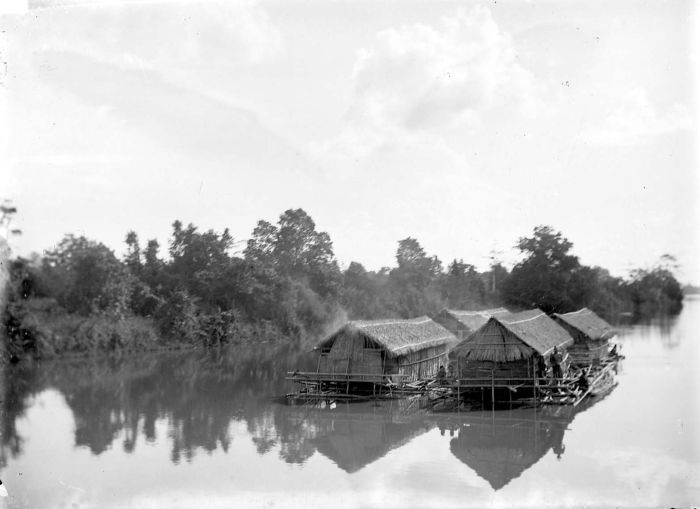
Although the “Island of Fire” was never “off the map,” to Srivijayan-era sailors, it was not a short trip either. With the South Equatorial Current and monsoons, a direct crossing from Sumatra to Madagascar would be demanding, yet perfectly doable for the experienced Austronesian navigators that had already made the Indian Ocean their workplace. In fact, for those that could dependably make the scheduled voyage from China to India, adding Madagascar into the route was an expansion of a known practice, and not a wild leap into the unknown.
This is my third post on this fascinating, and very rarely discussed historical connection between the Sriwijaya and Madagascar. The first is an introduction, the second is academic discussion of proof.
DNA Dates, Srivijaya’s Height and the Culture of Making Long Voyages
Genetic research on the Malagasy population places the earliest founding of Austronesian populations in Madagascar approximately during the first thousand years of the Common Era (CE), with a notable study identifying the largest Indonesian maternal founding event in close proximity to 830 CE, and involved in the process of introducing approximately thirty distinct maternal lineages. This dating corresponds to the peak of Srivijaya’s influence in South Sumatra, when Palembang functioned as a significant entrepot between China, India and the Arab World.
The wealth and political influence of Srivijaya rested upon its control over the Malacca and Sunda Straits, where it taxed and serviced ships that traveled between the South China Sea, the Bay of Bengal and further west.
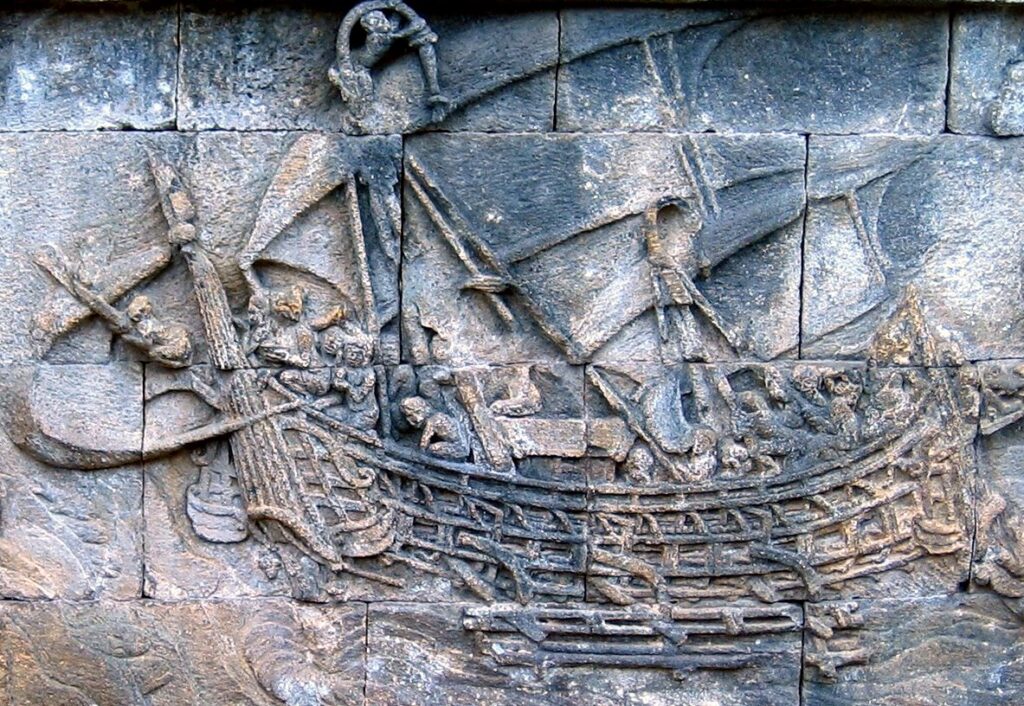
As a whole, Austronesian peoples were already accomplished blue-water sailors, employing outrigger and plank-built vessels that allowed them to traverse wide ocean expanses prior to the days of medieval European explorers.
When meeting with shipbuilders in the Riau Islands or South Sulawesi today, there remains a living remembrance, almost casual, of long monsoon voyages to distant ports; the attitude described by Srivijayan-era sources, simply scaled up and directed to the broader Indian Ocean.
The South Equatorial Conveyor Belt: A “Straight Line” to Madagascar
To some extent, modern oceanography makes the direct route from Sumatra to Madagascar appear much easier than previously imagined by older armchair historians.
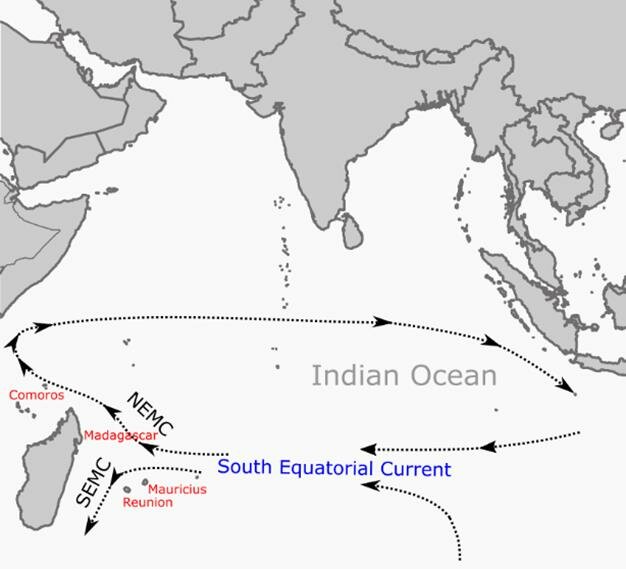
During the period of May to November, when trade winds and Indonesian Throughflow waters reinforce it, the South Equatorial Current in the southern Indian Ocean flows westward, carrying water (and any boats present in the water) from the vicinity of Indonesia towards Madagascar and the Mozambique Channel.
Both historical and modern sailing guides indicate that when the passage is timed correctly to match the seasonal flow of the current, a journey along this route is possible; numerous yachts currently make the crossing to Madagascar via similar latitude and typically spend about 21-28 days at sea.
Austronesian pilots employed a combination of stellar navigation, and determining rising and setting points of important stars; in addition, they employed mental maps of wave directions, wind patterns and star paths.
When combined with a west-flowing current and consistent trade winds, a “road” of sorts exists in the Indian Ocean for sailors; historians state that once the seasonal patterns of the monsoons were understood, long-distance trade between Southeast Asia, India and the western Indian Ocean increased significantly.
A notable example that has been frequently cited by scholars: pumice from the 1883 Krakatoa eruption in Java washed up on Madagascar’s east coast in less than three months, providing graphic proof that floating objects (including hulls) may travel along the same westerly path across the basin without supernatural assistance; for sailors accustomed to intentionally targeting landfalls many kilometers apart in the Pacific, following a rail of currents and monsoons from Sumatra to a relatively large island such as Madagascar falls well within their ability.
From sitting on a small wooden deck in eastern Indonesia, observing an older nakhoda “measuring” our course with reference to a star he refers to locally rather than a star identified in a Western almanac, it is harder to conceive of them not utilizing the same method to extend their voyaging further west when cargo, politics or plain curiosity aligned properly. The Indian Ocean was not an obstacle; it was merely a medium.
Revisiting “Impossible” Crossings
Considering all of the above, the image appears to be less a story of a single heroic “first crossing” and more a reasonable continuation of Srivijayan-centered, Austronesian seafaring culture into a portion of the Indian Ocean in which the physical properties of the ocean support them.
-A westward flowing current, strengthened by seasonal reinforcement originating in Indonesia and heading towards Madagascar
-A well-understood monsoon system that supported trade between Srivijaya, India, Sri Lanka, and the Arab world
-Proven capacity among Austronesians for navigating large distances across the open ocean and constructing vessels capable of such voyages
-Genetic evidence indicating a considerable, organized migration of Austronesians to Madagascar during the height of Srivijaya’s influence
From the perspective of someone who spends a great deal of time in Indonesian ports listening to captains discuss routes, the notion of a direct Sumatra-Madagascar crossing ceases to feel like speculative fantasy and begins to resemble precisely what these communities have always practiced: read the sky and the sea, rely on the vessel, navigate the seasons – and return to your destination in a manner that is more intelligent than the route you took to get there. To see the problem as a matter of “how did they manage to go to Madagascar?” is to misunderstand the nature of the question; the question is better phrased as “how did they manage to go to Madagascar regularly?”
Tripati, S. (2006). Monsoon wind and maritime trade in the Indian Ocean (1000 BC–AD 1500). Current Science, 90(6), 864–873.
Chen, G. (2022). Seasonal structure and interannual variation of the South Equatorial Current in the Indian Ocean. Journal of Geophysical Research: Oceans.
Campbell, G. (2009). Austronesian mariners and early trans-Indian Ocean crossings. In Navigating African maritime history.
Wikipedia contributors. (2003– ). Srivijaya. In Wikipedia, The Free Encyclopedia.
Blench, R. (2015). Evidence for the Austronesian voyages in the Indian Ocean. In G. Campbell (Ed.), East Africa and the early trans-Indian Ocean world interchange.